 />
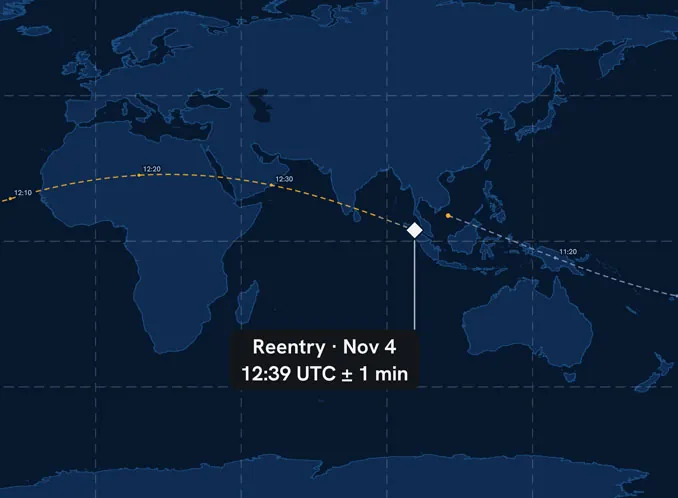
Graphic based on tracking data shows where ’s Neil Gehrels Swift Observatory is believed to have reentered the atmosphere. Image: John Pisani/Spaceflight Now.
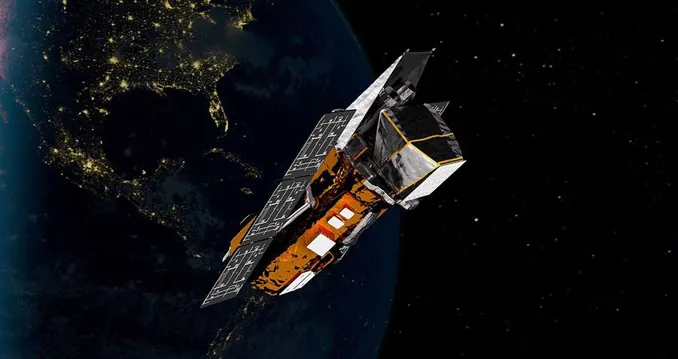
NASA’s Neil Gehrels Swift Observatory plummeted back into Earth’s atmosphere Wednesday over western Indonesia, ending nearly 22 years in orbit for the gamma-ray burst hunter after a failed attempt to rescue it.
Swift re-entered at 7:39 a.m. EST (1239 UTC) near 3 degrees north latitude and 99 degrees east longitude, over Indonesia’s North Sumatra region, according to U.S. Space Force tracking data later confirmed by NASA.
“NASA expected most of the spacecraft to burn up as it traveled through the atmosphere, but some components may have survived re-entry,” the agency stated in an update to Swift’s blog Wednesday afternoon.
The timing landed comfortably inside official forecasts. Earlier Wednesday, the Space Force had predicted re-entry between 6:42-8:42 a.m. EST (1142-1342 UTC) Wednesday. Swift came down pretty much in the center of that time period.
NASA had put the risk of anyone on the ground being harmed by any surviving fragments from Swift’s reentry at about 1 in 2,100.
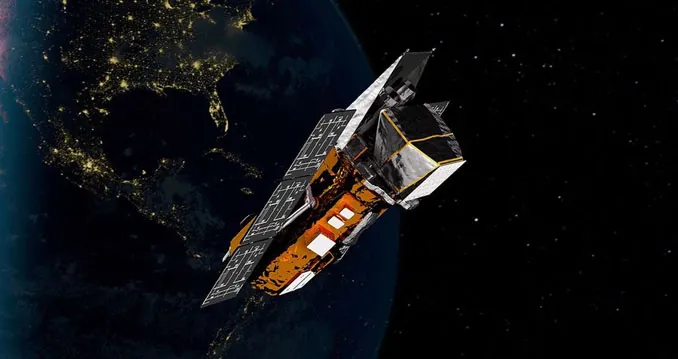 />
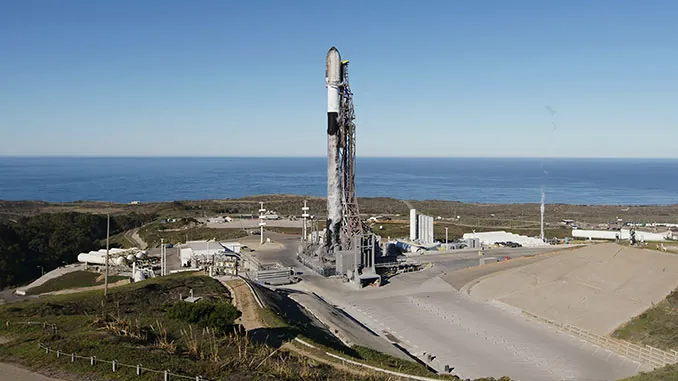
Launched from Cape Canaveral atop a Delta 2 rocket Nov. 20, 2004, Swift was designed to operate for two years. Instead, during a mission spanning more than two decades, it observed more than 2,000 gamma-ray bursts and studied more than 1,400 supernovae, swinging its telescopes toward fleeting cosmic explosions within about a minute and alerting observatories worldwide so they could follow up. Swift data have contributed to about 7,000 scientific papers, according to NASA.
Swift had no engine, and solar activity swelled the upper atmosphere, producing more drag than NASA expected and hastening its fall from low Earth orbit. NASA paid Katalyst Space $30 million to send a robotic tug, LINK, to grab Swift and push it higher, but the Katalyst-built craft lost control of its orientation weeks after its July 3 launch, and NASA called off the capture Aug. 19.
Swift made its final observation Oct. 20 from about 171 miles above the Earth’s surface.
“At launch, Swift was a first-of-its-kind multiwavelength observatory designed to study the most powerful explosions in the cosmos using its three telescopes,” NASA’s blog post announcing Swift’s re-entry states. “Swift has broadened our understanding of a wide variety of cosmic objects and events, from active galaxies powered by supermassive black holes and stars undergoing X-ray flares, to supernova explosions and comets and asteroids in our own solar system.”
← Back to News Archive